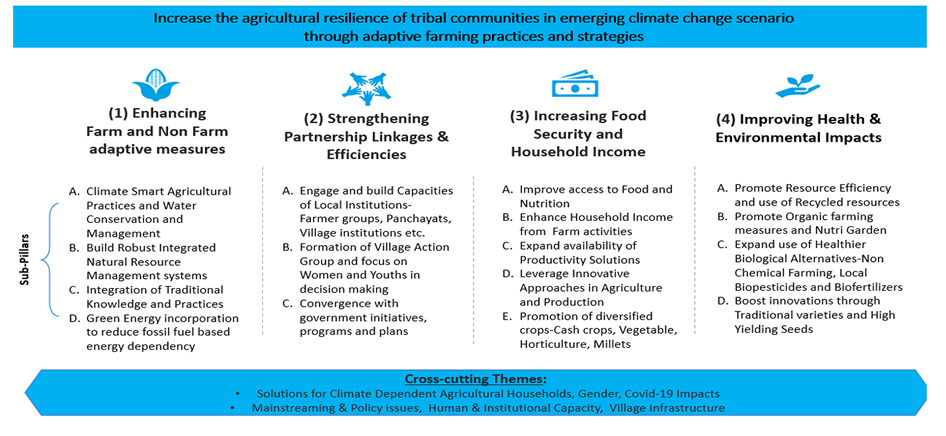
The agricultural backwardness of the region is attributed to several challenges including low level of irrigation facilities, undulating topography and exacerbated by the local effects of global climate change. In addition, use of chemical fertilizers and pesticides in the agriculture sector is steadily on rise in Jharkhand. This has not only resulted in increased input cost for the poor farmers but also rising contamination of the local water bodies, soil and the ecological systems. In order to address the agricultural issues impacted by growing climate change effects, LGSS has been working with tribal and marginalized households to build their adaptive capacity, knowledge and practices on climate smart and eco-friendly agricultural practices and livelihood resilience.
The project is being implemented in Lohardaga district of Jharkhand characterized as one of the most vulnerable tribal districts as per the state action plan on climate change. The focus is on poor and marginalized farmers in Kairo block ofLohardaga and address their livelihood and farming challenges through introduction of climate adaptive and organic farming measures.
Concepts of integrated natural resource management, adaptive farming techniques through all season crops, locally available and recycled resources and indigenous and high yield seeds, and linkages with competitive animal husbandry practices is being promoted and strengthened as part of the program intervention. Convergence with agriculture department and sustainable assets creation through MGNREGA is being facilitated along with mainstreaming of climate change with government planning and programmes at local level.
Multifaceted approach