
Environment, Energy and Climate Change
Climate change is one of the biggest environmental challenges world is facing in current time. The effects of global climate change are increasingly being witnessed at local level impacting the livelihoods and agro-ecological systems of the rural communities. According to the reports of Intergovernmental Panel on Climate Change (IPCC) poor communities will be facing the highest brunt due to their limited adaptive capacities and high dependency on climate-sensitive rainfed agricultural systems and natural resources. This is already being seen in case of Jharkhand’s communities experiencing severe challenges to sustain their livelihood due to regular spells of droughts in the past two decades. Jharkhand is characterized as one of the highly vulnerable states of India to climate change and variability. The effect of global climate change has aggravated the already present problems of the rural communities in Jharkhand.
To address this pressing issue LGSS initiated a comprehensive bottom up study in 2010 to explore the local impact of climate change and variability and understand the perception of tribal communities. The results of the study provided us a roadmap and we have priortised our works on climate change adaptation and mitigation, sustainable energy transition and environmental awareness with a focus on tribal and backward communities of Jharkhand. The organization is also engaged in building capacities of tribal institutions, gram sabhas, panchayats, women, migrants and youths on issues of environment, climate change and sustainable energy transitions.
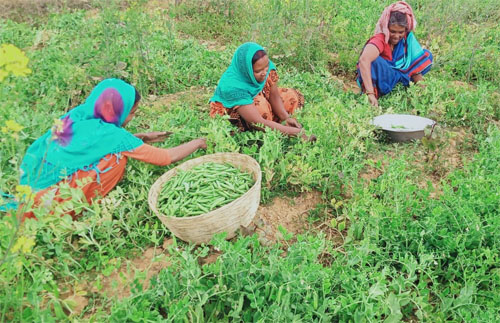
Climate adaptive agricultural processes
The local impact of global climate change is already having far reaching effects on the livelihood of local communities of Jharkhand dependent on climate sensitive rain-fed agricultural systems. In recent decades, the state has frequently witnessed delayed monsoons, erratic rainfall, prolonged dry spells, and increases in temperature. This has exposed the farmers of Jharkhand to numerous socio-economic problems. Agriculture in the state is predominantly rain-fed; presenting high agro-climatic constraints for the 80% of rural population that is mainly dependent on mono-cropped agricultural practices.
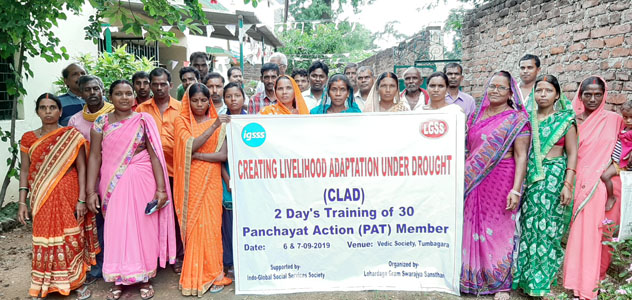
Creating Livelihood Adaptation under Drought
Regular occurrences of drought in the past two decades have aggravated the challenges of food and water security and livelihood among the communities in Jharkhand. Our study and experiences from ground clearly indicate the rising stress among communities due to increased incidences of drought in the region. Monsoon failures, rainfall reduction, erratic rainfall, heat waves etc are widely being experienced by communities in current time. As a result issues of crop failures, water scarcity, health problems, livestock deaths, food insecurity and hunger are getting intensified at grassroots due to drought.
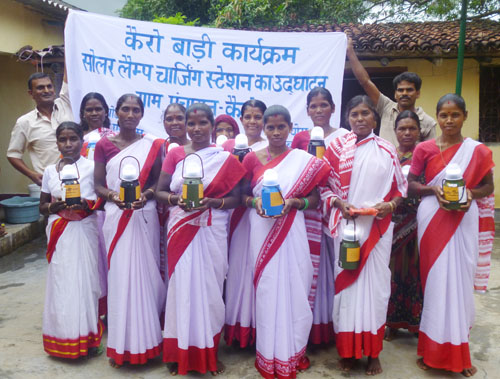
Sustainable energy transitions
Tribal communities living in remote settings continue to depend on firewood, kerosene and fossil fuel sources such as coal to meet their household needs of cooking and domestic lighting. A recent study of 2020 conducted by ISEP-Initiative of Sustainable Energy Policy (John Hopkins University, USA) on Energy in Rural Jharkhand highlights that though access to grid power has increased in Jharkhand, 24% rural households preferred to rely on kerosene as their primary lighting fuel. In tribal areas, lack of continuous power supply, remoteness of villages and traditional practices on use of firewood, kerosene and coal compared to LPG not only has implication on the health of women and environment but also affects their overall socio-economic development.