Natural Resource Management
Jal(Water), Jungle(Forest) and Jameen(Land) are the fundamental sources of life for the tribal and other rural communities of Jharkhand. The communities live in close proximity with these resources and fulfill their livelihood needs. They have maintained their primitive connection till today. However, the resources are under stress and declining due to various factors such as land degradation, mining activities, deforestation, and increasing impact of climate change in recent times. Natural Resource Management has remained a core focus in thirty-five years of our community engagement works. We have undertaken significant measures in promotion, facilitation and demonstration of NRM based practices with the rural communities to strengthen their livelihood and maintain the human-nature relationship. Our approaches focus on integration of traditional knowledge of local communities with contemporary practices, capacity building of communities on INRM techniques and making them part of the decision making process.
NRLM-MGNREGA-CFT Project
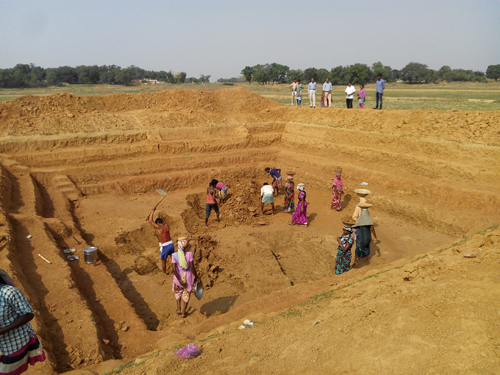
The Cluster Facilitation Team (CFT) project was initiated as a pilot project in the year 2014-15 in Lohardaga district in convergence with National Rural Livelihood Mission (NRLM) and Mahatma Gandhi National Rural Employment Guarantee Scheme (MGNREGS). It focused on creating assets for sustainable rural livelihoods of the vulnerable sections of the society. The programme targeted at enhancing the technical capacities to implement the programme at the block and gram panchayat levels and thereby increase the scale of MGNREGA works, reduce delays in wage payments and improve the quality of assets constructed under the programme. To fulfill the goals "Cluster Facilitation Teams" (CFTs) was formed comprising of specialists from various fields with the knowledge and experience of integrated natural resource management (INRM), agriculture engineering, social mobilization and rural development at clusters of gram panchayats to support and facilitate the planning and implementation process of MGNREGA.
Wadi-NABARD
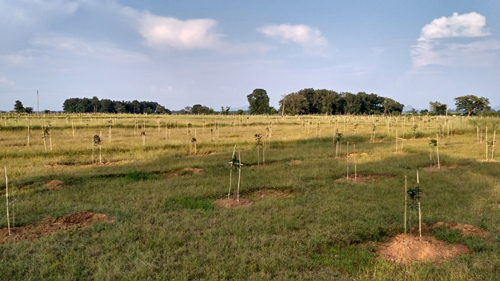
LGSS introduced WADI, an agri-horticulture based farming system, in Lohardaga district with the support of NABARD in 2010. The project focused on tribal households who lacked alternative means of livelihood and depended solely on rainfed paddy farming to meet their subsistence. The project addressed predominant issues of food and water insecurity, nutrition, ecological degradation, migration and other socio-economic problems of the communities. The programme was implemented in six villages - Gajni, Ulti, Chalho, Mahuari, Pachagai, and Narauli in Kairo block of Lohardaga district. As part of the project, more than 500 tribal households were linked to activities such as agri-silvi-horticulture, soil conservation, land and water management practices through training, workshops, field demonstrations and continuous handholding support. Particular focus was given to women entreprenurship and enhancing their skills on raising nurseries, marketing, vermi-composting and kitchen gardening. Today, the households have alternative livelihood source and year round availability food & fodder, and continuous source of income.